Creed Aventus (2010): To Eat The Royal Pineapple {Perfume Review & Musings}
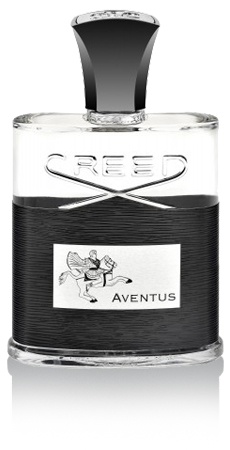
Aventus is the latest fragrance composition by the house of Creed est. 1760, originally a tailoring house in England. Later, they became - and this is little known - one of the chosen select to have the privilege of belonging to the very exclusive French Syndicate of Haute Couture, long after they moved to Paris in 1854. They are now better-known for their perfumes, as well as longevity as a family-owned business over the course of six generations with patriarch Oliver Creed and son Erwin Creed as the latest male representatives of the dynasty although daughter Olivia Creed also takes part in the dealings of the brand, but more discreetly so.
Once more, as is their consistent tradition, this establishment-oriented perfume house turned their attention to a famous historical figure - Napoleon Bonaparte this time (see also Jackie Kennedy) - to inspire their creation, which "...honors traits of virility, power, strength and vision, inspired by Napoleon, the man who crowned himself emperor of France and all Europe, a self-made king who waged war, peace and love on terms he set."...
The inspirational component of the scent is there and can be evaluated by potential patrons who would like to wear a perfume which speaks to them on an appealing symbolic level as can be read on the UK website,
"AVENTUS, the spirit of the man whose life and ambitions know no boundaries! [...] Evoking the legendary men whose inspiration and drive have changed the face of the world, AVENTUS conjures up lost empires, far distant lands and exotic ambitions."
Like for Love in Black which celebrated the biography of Jackie O, Aventus derives olfactory meaning from key, carefully highlighted ingredients that the creators were able to associate with Bonaparte's life itinerary. There is, no doubt, a certain level of arbitrariness and randomness, or simply, creative license in doing that. You can well imagine that Napoleon left in his wake innumerable olfactory cues. Nevertheless, for instance, his favorite palace dessert remains Royal Pineapple and thus it is present here to contribute to a significant fruity and gourmand facet to the scent. As a military man, the former emperor of the French had also culinary tastes derived from his life in warfare time, with Poulet Marengo being one of his favorite battle-field dishes.
One could have found an ancient eau-de-cologne accord also as the Emperor is famous for having been a great consumer of it, literally showering himself with it, but this reference was set aside in this case. His symbol, the imperial bee could have led to the inclusion of honey or beeswax notes but they are not included. A more nihilistic interpretation could have heavily utilized the scents of war, but Creed is not interested in experimental sensory works.
According to the press release, the notes in the perfume ought to be understood in the following biographical manner,
"The ingredients in CREED Aventus track the life and rise of Napoleon. Its top note is blackcurrant from Corsica, the sunny land where Napoleon was born. Next is bergamot from Italy, where young Napoleon's first victories made him famous. Next are Calville Blanc apples from France, where Napoleon climbed to power as emperor. Royal pineapple, Napoleon's favorite palace dessert, completes the top note.The middle note starts with Napoleon Roses. Next is Louisiana birch, crafted to make his throne. Following that is jasmine from Egypt, a far point in Napoleon's empire. Exotic patchouli, valued for scent, but also as a totem of health, completes the middle note.The base note is oak moss from Spain, a late Napoleonic conquest. Ambergris from the seas shows the reach of Napoleon's navy. Gourmand vanilla in the French style signals the touch of high living Napoleon enjoyed."
Notes: Bergamot, Blackcurrant, Apple, Pineapple /Juniper Berries, Birch, Patchouli, Jasmine / Musk, Oak Moss, Ambergris, Vanilla.
How it Wafts
The fragrance opens on an above average tonic, zesty citrus opening which while it recalls the über lemon-y Monsieur Balmain by Balmain for its frank outburst of citruses, does not smell like it. In the background, rather discrete, is a familiar ambery-woody masculine cologne accord which feels both urban-chic and outdoorsy in the sense that it evokes the atmosphere of a forest.
What reveals itself to be less traditional is the development and quiet ushering in on the scene of a fruity note which evokes to me at first osmanthus and apricot but which in fact is meant to be pineapple. After you learn to recognize it, it does indeed smell like pineapple but with a serving of vanilla. It reminds me of a kind of dessert I used to feast upon in my childhood: a fresh pineapple filled with vanilla ice-cream mixed with carved-out chunks of the same pineapple. The pineapple accord on which my nose focuses quite a bit here comes across as slightly unusual, offering an interesting sour nuance - a high-pitched musk - and then a slightly smoky one - seemingly due to ambergris and patchouli.
The pairing of pineapple and hesperidic notes in the heart of the fragrance is doubly unexpected; it comes across as a balancing act between a fruity and fresh roundness and a pale, brisk citrus note which evokes the coldness of vodka; its placement in the middle stage of development of the perfume is somewhat surprising as you would have expected the accord to be located in the top notes. You would have also expected for it to feel more blended-in rather than quite perceptible in a 3-D style.
As Aventus continues its development, it becomes clearer that the composition is cultivating a certain level of originality, as a third atmosphere not necessarily a very logical one succeeds, smelling of smoky tonka bean and sweet resins with a hint of coffee which seems to be due to the patchouli. The drydown also unveils nuances of caramel, toffee, and coffee.
The perfume manages to feel original, especially for a masculine cologne, thanks to the attentive insertion of well-defined and headspace-like fruity notes. Aventus does not smell fresh in a classically coded way but rather as if you had just cut open a ripe Royal pineapple and Calville Blanc apples. The realistic freshness is tempered by very soft, suave fruity nuances. The brand is apparently conscious about this renewed sense of freshness calling it "imperial freshness."
The composition also feels somewhat idiosyncratic, in a good way, as the perfumer was encouraged to seek disparate sources of raw-material inspiration in the biographical details of Napoleon's life. Even if I didn't know that there are here Calville Blanc apples of France and Royal Pineapple dessert, or Louisiana Birch, I could experience a progressive fading into different, variegated atmospheres. The composition feels like a patchwork of select, rare relics.
When I asked about the interesting smoky and sour nuances of the Royal pineapple accord inquiring whether it was just the fruit or a pastry, I was told that although the press release had not mentioned it specifically, it was indeed a pastry dessert which is at the heart of the fragrance. Press officer Adam Brecht added that the Creed family are connoisseurs of food and that Erwin Creed in particular loves to cook.
It might be of interest to readers to know that if Napoleon loved to eat Royal Pineapple, there might have been a symbolic component to it as the fruit was seen to be a symbol of England. A 19th century caricature represents Napoleon saying that he wants to conquer the Royal pineapple, meaning the throne of England. The fruit was first introduced there and its green toupet was seen to be in the shape of a crown. It was readily called the King Fruit upon its introduction in England. Under the 1st Empire, pineapple was also considered a symbol of high status and luxury.
What is interesting about Aventus is - beyond its olfactory personality which is pleasant and draws you in - the manner in which it attempts to render the supple fabric of life.
Like life itself, Aventus is not logical, but it ultimately manages to affirm meaning and a sense of quirky balance. This can be felt in the overall harmony of the ensemble while the fragrance still lets out notes that feel plucked out from very different families of smells. If you enjoy L'Artisan Parfumeur Ananas Fizz but think it is too understated as a pineapple cologne, then Aventus is still light but fleshier.
A perfume it reminds me of the most in the phase where it wafts of coffee, roses and resins is Torrente L'Or (2001), a feminine composition which retrospectively can be seen to hold the inspiration for a balance of masculine and feminine notes. The rose in Aventus is quite present; it is fruity and soft but made more unisex thanks to this coffee-like nuance.
Despite its labeling as a masculine scent, Aventus, which means "success", is unisex enough to be happily worn by women as well thanks to this rather prominent fruit facet. It has furthermore to my nose a light fruity chypré vibe. Since it was inspired by a man who loved women (see quote), there is no need to feel Aventus was meant for gentlemen only.