




Skarb by Humiecki & Graef (2007): How Men Cry - Part I {Perfume Review & Musings} {Scented Thoughts} {New Fragrance} {Men's Cologne}

Skarb means "treasure" in Polish; it is the name of the first fragrance put out by the niche perfume brand Humiecki and Graef, named after the two grandmothers of founders Sebastian Fischenich and Tobias Müksch: Helena Humiecka z Humiecina (1908-2000) and Katharina Graef (1906-2004).
There exists here so many networks of meaning on which the existence of this perfume rests that it is worthwhile to try to present a few of them. First the fragrance is said to explicitly refuse the traditional order and hierarchization of notes. Skarb is an attempt to reflect the intricacies of life and history - especially as impacted by National Socialism in Eastern Europe, the points of rejoinder and departure, the memories and emotions that beset and nurtured human lives in that region - into the language of perfumery........
Just like Skarb refuses to reproduce, as largely unsatisfactory and pedestrian, the standard pyramidal construction of notes established since the end of the 19th century (Elisabeth de Feydeau argues that 18th century formulas show in fact that the phenomenon started in the previous century), most famously by Guerlain with Jicky, and which is being more and more put to test now by the developments of chemistry allowing for much more sophisticated, tactile impressions and control of spatial orientation and definition of our sensations around a perfume (cf. the spiral construction found in, precisely, Guerlain Insolence). Similarly, Fischenich and Müksch in collaboration with perfumer Christophe Laudamiel have decided to reject any simplification of the possible narrative told by a perfume. There is no beginning, apex, and conclusion. Instead, there is a star-shaped construction of the perfume, we are told, whose branches radiate and lead back to a core still classically located at the center of that star. The perfume attempts to be more than a story, it attempts to be life itself. And the core seems to be an affective core.
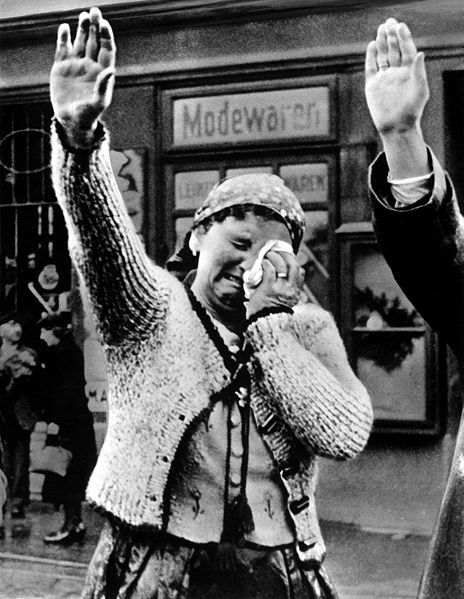
On another level, Skarb presents itself as being the romantic perfume par excellence - a music by Chopin plays on their website - although the scent's olfactory personality has nothing to do with conventional representations of what a romantic perfume might be. If L'Heure Bleue can be construed as being romantic, dreamy and waltz-like in a more widely accepted and recognizable sense today, Skarb is romantic in a forgotten sense; the word "eruptive" chosen by the authors to describe this sensation is completely apt. The perfume opens with a hitherto unknown sense of aggression and dynamism, literally jumps at you like a surge of violent emotions breaking one's sense of tranquility and resounding of a diffuse noise that seems to emanate from a crowd. One is reminded of the tears of despair streaming down on the faces of Czechoslovakian men standing on the streets when the German Nazis invaded Prague in 1938.
When one experiences Skarb it is as if one were moving away from the officially clear structures of the Enlightenment as transposed in the history of perfumery to the most sentimental, emotion-ridden moments contained in that period which will give birth later to the full-fledged Romantic period. This type of emotional perfumery is not yet mainstream, far from it, but may become a movement later on to be taken seriously. When Benjamin Franklin visits Voltaire on his death bed with his grand-son William Temple, whom he wants the writer and philosopher to bless, after a few words pronounced by the latter on Temple's head blessing him "in the name of God and liberty", the whole room is said then to burst into tears. The cathartic properties of collective crying are publicly displayed without restraint and for a 21st century witness, is an unexpected contrast with the display of rationalism in the very sanctuary of Voltairianism. But the two are not incompatible as we can see, and carefully examined ideals not just emotions can make one break down and cry.
On a third level, Skarb elaborates upon the concept of the Slavic soul developed by the Slavophiles and Nikolaï Berdiaev in particular applying it here with a constraint on gender. We are dealing with men only and addressing a soft societal taboo, the public display of men's emotions, the vulnerability of the virility ideal in its most conventional form. What is interesting to Humiecki and Graef is to capture in perfume the intensity of a reality "Slavic men crying"and turn it into art. The Russian Berdiaev in "Slavophilism and the Slavic Idea"(1915) theorized the Slavic soul and in this passage the Polish and Russian ones in particular, establishing the preeminence of the Slavic soul over religious denominational differences and national differences saying,
"For the Slavophils the Slavic world in its spirit ought first of all to be Orthodox. They felt the non-Orthodox Slav to be a traitor to Slavic matters. And they could not forgive the Polish people its Catholicism. They could not understand and love the Polish soul, because they could not understand and love the Catholic soul. But everything unique to Polish culture is defined by this, that in it Catholicism is focused within the Slavic soul. [....]
But this Russian soul can in a brotherly way co-exist with other Slavic souls, such as have accepted an other spiritual engrafting and represent a different cultural type. The soul of Russia can love the soul of Poland, another great Slavic people, and from this be still more so itself. From such an unity of different souls and Slavs, the Slavic world can only benefit."
If the idea of a Slavic soul exists most definitely as an idea, it seems to have been adopted in popular representations as well.
On a fourth level, Skarb references, it seems, the experimental work of photographer Sam Taylor-Wood. Perfumer Christophe Laudamiel was actually put to the task of using pictures of Slavic men crying in the context of the historical disruptions created by the ideology of national-socialism. The archetype of the Slavic soul in full action was studied. As the stereotype goes, the Slavic soul seems to be gifted for suffering, is infused with melancholia, is prone to irrational excesses, and seems to bathe in a water-world of emotions too complex to transcribe otherwise but by poetry, perfume, mysticism and the meditative quality of a film by Tarkovsky. If the concept of men crying is thus novel in the domain of perfumery, it was already explored by Taylor-Wood in 2002-2004 in photography. She asked a series of male actors to act the part of a crying man. Each artist offered his own interpretation and it was caught on camera then the pictures were bound in a book called Crying Men. Daniel Craig on the picture is one of the crying men......
(To be continued in part II......)


Fischenich is a very unique name in the United States. Nearly all the Fischenichs are descended from one family that came here in the 1850's. I wonder if Sebastian Fischenich might be one of our relatives. I would appreciate it if you could check with him.
The brand is located in Germany. It would probably be more direct if you tried to contact them through their website.
The fragrance is excellent! It has an intriguing note of "brown sugar" and gives one the impression of being in an organic health foods shop amidst wholesome vegetables, bran and bread. Said to contain lovage and might well do. Alongside the earthy culinary aspects is an attractive metallic freshness, which has led some people to compare it to 'Magnificent Secretions' from Etat Libre d'Orange. The drydown is more conventional woody-amber, the overall effect quite masculine.