




Serge Lutens Sa Majesté La Rose (2000): If Ivan The Terrible Were A Rose {Perfume Review} {Smell-The-Roses-Till-Valentine's Day Challenge - Day 11}
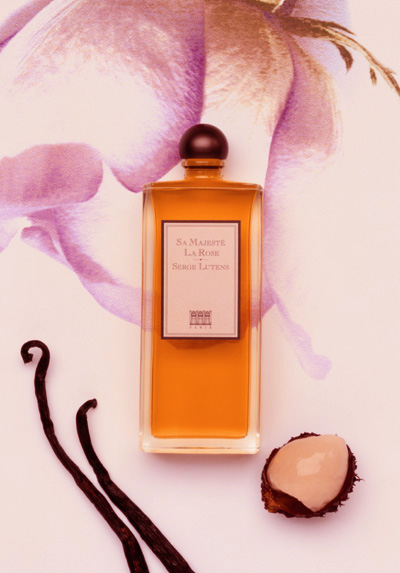
Sa Majesté La Rose by Serge Lutens (Her Majesty The Rose) is a soliflore composition centering on Moroccan rose absolute. The perfume showcases to a certain extent the brutality and rawness of rose absolute, making it only relatively tamer and more civilized but without attempting to hide or tone down its rough-diamond aspect. This is an ode to the triumphant nature of the raw material and to an all-engulfing central presence...
Apart from devoted rose lovers people who like metallic nuances in their perfume plus a certain measure of natural aggressiveness in their scents may turn their attention to this prima donna of a rose perfume. Once she enters the room, it is as if she expected all glances to converge towards her.
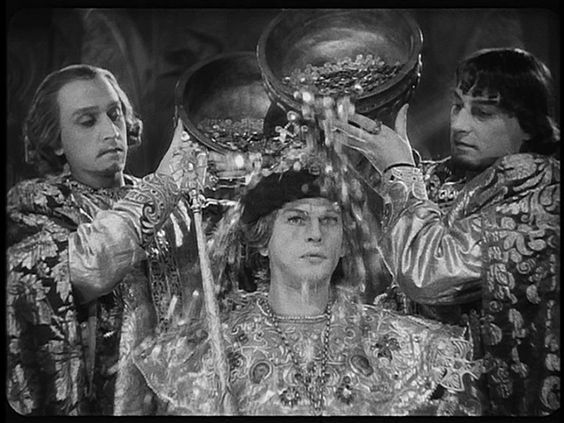
A still fom Ivan The Terrible by Sergey Eisenstein
The opening is magnificent, both very fresh and liquorish-y, like a shower of well-formed rose petals exploding out of a florist's fridge but also falling from the sky. This representation of a rose seems injected for the purpose of a movie shoot with a triple dose of rose absolute by a Hollywood make-up artist concerned that it might look a little too pale on the silver screen. In other words, it's a photoshopped rose for glamour purposes. A fruity lychee touch contributes to fleshing out the rose making it feel more "real". One can distinctly smell the form of the rose aroma as if it were concentrated like dew inside small cups formed by the curved-in petals oozing with sap.
Next, the perfume becomes less three-dimensional and more like a series of perfume accords with metallic, marine, and powdery nuances, before becoming woodier. The intertwining of metallic accents and powdery ones creates the effect of a silvery cloud of rose-scented powder. Some aldehydes and a lemon note bring an understated lift to the scent, which is otherwise on the surface of it powdery suggesting soft white chalk. There is a soft raw flour undertone, and a touch of beeswax polish making their subtle presences felt.
Her Majesty, which is hardly toned down, is sharp and even a bit hard. It is not so much a subtle rose scent as a powerful one. As it mellows down, the rose reveals a rounder, more narcotic side to her thanks to the Guaic wood note.
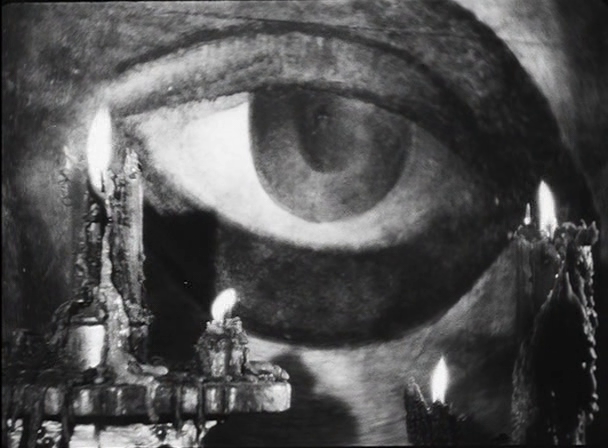
A still fom Ivan Groznyj by Sergej Eisenstein
This rose soliflore out of Medieval times has some weaknesses and tender spots which make her more accessible, expressed by a discreet gourmand citron meringue note hidden behind the satiny folds of the petals contributing to making her appear a sligltly less like the terrible potentate of rose perfumes.
The long dry-down further reveals her tender kittenish undebelly: she is also soft, creamy, floral, musky, and honeyed capable as well of offering the perception of a more variegated bouquet of charming and gentle spring flowers holding her train in check and closing the march of the rose.
Notes: Moroccan rose absolute, gaiac wood, clove, white honey, musk
Not sure what you mean by "rose amateurs." Can you elaborate?
In the sense of being a "rose lover" or "rose admirer".
Here is a good quote that explains this usage, from The American Heritage Dictionary,
"When Mrs. T.W. Atkinson remarked in her 1863 Recollections of the Tartar Steppes and their Inhabitants, “I am no amateur of these melons,” she used amateur in a sense unfamiliar to us. That sense, “a lover, an admirer,” is, however, clearly descended from the senses of the word's ultimate Latin source, amtor, “lover, devoted friend, devotee, enthusiastic pursuer of an objective,” and from its Latin-derived French source, amateur, with a similar range of meanings. First recorded in English in 1784 with the sense in which Mrs. Atkinson used it, amateur is found in 1786 with a meaning more familiar to us, “a person who engages in an art, for example, as a pastime rather than as a profession,” a sense that had already developed in French. Given the limitations of doing something as an amateur, it is not surprising that the word is soon after recorded in the disparaging sense we still use to refer to someone who lacks professional skill or ease in performance."