




Azzaro Pour Homme by Azzaro (1978) {Perfume Short (Review)} {Men's Cologne}
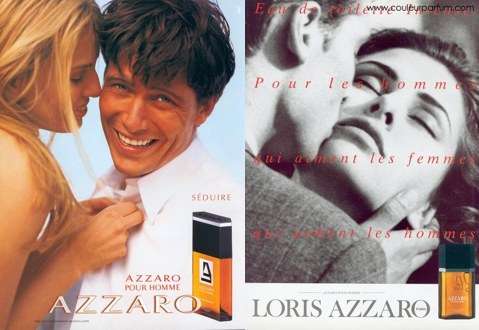
Azzaro pour Homme by Loris Azzaro today is still since its launch in 1978 one of the best-selling men's fragrances in the world. In 2006 last year was still the third best-selling cologne for Father's Day in France. If one of its creators, perfumer Wirtz's ambition was to bring it a grade of excellence beyond the one reached by Paco Rabanne pour Homme, which pioneered the category of the aromatic fougère redolent of Mediterranean herbs and aromas typically found in the scrubland, he seems to have succeeded in his endeavor......
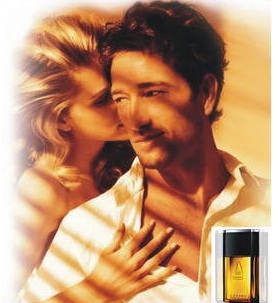
Azzaro Pour Homme was composed by a team of three so-called "noses" overtime; Richard Wirtz of Maurer & Wirtz who had bought Azzaro Parfums in 1975 was the perfumer who contributed to the composition from the start based on his own idea and Loris Azzaro's. An interview with fragrance developers Gerrit Van Longchem and Gérard Delcour around the scent in 1998 reveals that the project got almost killed at some point due to Wirtz's perfectionism as he constantly felt that the project had not reached the level of achievement he wanted for it. Once Wirtz started feeling more satisfied with the results however a collaboration with two other colleagues took place namely with perfumers Gérard Anthony and Martin Heiddenreich. The main olfactory concept behind the fragrance composition was to create a "modern aromatic fougère with a musk overtone".
As pointed out earlier, Azzaro pour Homme is more complex-smelling than its forerunner Paco Rabanne pour Homme; this aspect does not rest on an olfactory illusion but on the fact that the composition includes 320 different ingredients. In today's times where a more economic aspect to fragrance creation is stressed and where the act of deleting unnecessary ingredients is seen as being a more sophisticated approach than the over-abundant inclusion of these, one can well understand that Azzaro Pour Homme belongs firmly to a different era, the one in which perfumers could boast about more complex figures. This outlook and evolution is perceptible for example in Jean-Claude Ellena's career and the contrast found between the richness of the 160 ingredients he used to create First by Van Cleef & Arpels (1976) and his most recent creations for the Hermessence line which are exercises in minimalism and restraint.
The ideas contained in Azzaro pour Homme seem to have inspired feminine perfumes as well as its influence can be felt in perfumes like Fendi by Fendi or Theorema by Fendi.
Azzaro Pour Homme is a seductive fragrance with a dual type of Mediterranean macho persona. It is masculine yet far from being austere integrating on the contrary nuances that are almost feminine and decorative. It is fresh, woody and warm yet also floral, darkly fruity and sweet with hints of savory-sweet candied sweet green olives and Chinese prunes. Its marked amber-y body is well hinted at by the amber glass of the flacon designed by Pierre Dinand. A citrus edge runs throughout the cologne like lemon lace bringing a certain olfactory finesse and lift to the fragrance. It could almost evoke an Oriental atmosphere thanks to its richness and warmth but the invigorating freshness and relative dryness of the woods make it leap from the brocaded cushions of the harem in which it might have remained to luxuriate, and create instead a sense of movement and of the outdoors. The scent blends its 320 ingredients rather than call attention to any one of them in particular. The result is a scent with a signature that many will recognize, the more so since it is long-lasting.
Notes include ambroxan, di-hydro myrcenol, lemon, basilic, petit grain, neroli, cumin, cardamom, sandalwood, aniseed, fennel, vetiver, ambergris, Hungarian lavender, patchouli, fougère accord.
(Sources: Cosmetics International, Cosmétique Hebdo, Okadi, Le Figaro, Libération. Images de Parfums, Pierre Dinand)
AS A MATTER OF FACT,AZZARO FOR MEN IS ONE OF THE MOST IMPORTANT CREATION ...AND I'D LIKE TO ADD THAT GERARD ANTHONY'S ONE OF THE MOST SEXY FRENCH PERFUMER I REALLY LOVED.
I recently use AZARO and i like it very much but its not a sexy fragrence. I think its totally a decent fragrence i personaly think about it. but good
is any of the 320 ingredients of the AZZARO parfum toxic to humans??
has the components of the fragance been tested by anyone??
Which kind of environmental impact does the production of this parfum has?
Thanks for your answers
I have been using Azzaro since 1981, four years after its release, and I can guarantee that the perfume has changed radically, who did not try it before did not have the opportunity to experience what that perfume was. Until 1994-5, the Azzaro was a unique perfume, it had strong fragrance, accentuated and a spectacular fixation. Single at the time, I put it, go out at night, back home, take a nice shower and when I lay the fragrance passed to the pillow. They were up to 3 days still with the residual perfume over skin. After dating a girl who worked in a perfume's shop I won other products and left Azzaro. Already in years 2003 I bought a bottle and I discovered that it was another perfume. I read on some site, I can not guarantee the accuracy of the information, but I learned that the fixative that provided that original Azzaro fragrance of the 70s-80s was obtained from the fermionone extracted from a sexual gland of a Himalayan mammal, I hadn't known about sacrificing the poor animal. With the pressure of the animal protector groups AND I THINK IT CORRECTLY, I DID NOT KNOW ABOUT OF THAT PARTICULAR the company was forced to look for a route of production of the perfume by means of a synthetic fixative in laboratory and that unloaded the original perfume. Of concrete is, who used this perfume in years 70-80 uses another perfume today.
Unfortunately, i have to agree with Paulo that the scent has undergone a dramatic transformation. First of all, the citrus is now the fake, fizzy one they introduced some years ago, the aromatics are bleached, and the only time you the scent resembles doesn't feel like a ghost of its former self is the mid-section. The base notes, frustratingly, kick in too soon and bear one of the (tired and tiresome) hallmarks of today's men's perfumery - tonka bean - which is, if I'm not mistaken, NOT that conspicuous in the original version (and by 'original' I mean versions pre-2008).
Thanks for calling attention to an unannounced reformulation. Too bad because it's one of the greats. Tonka bean has become almost like life insurance for so many men's scents, after 1 Million.