




The Popularity of Clover Aromas and L.T. Piver Trèfle Incarnat in Literature and Perfume since the 19th Century {Scented Thoughts (on St Patrick's Day)}
The Popularity of Clover Aromas, & of L.T. Piver Trèfle Incarnat in Particular, in Literature and Perfume since the 19th Century
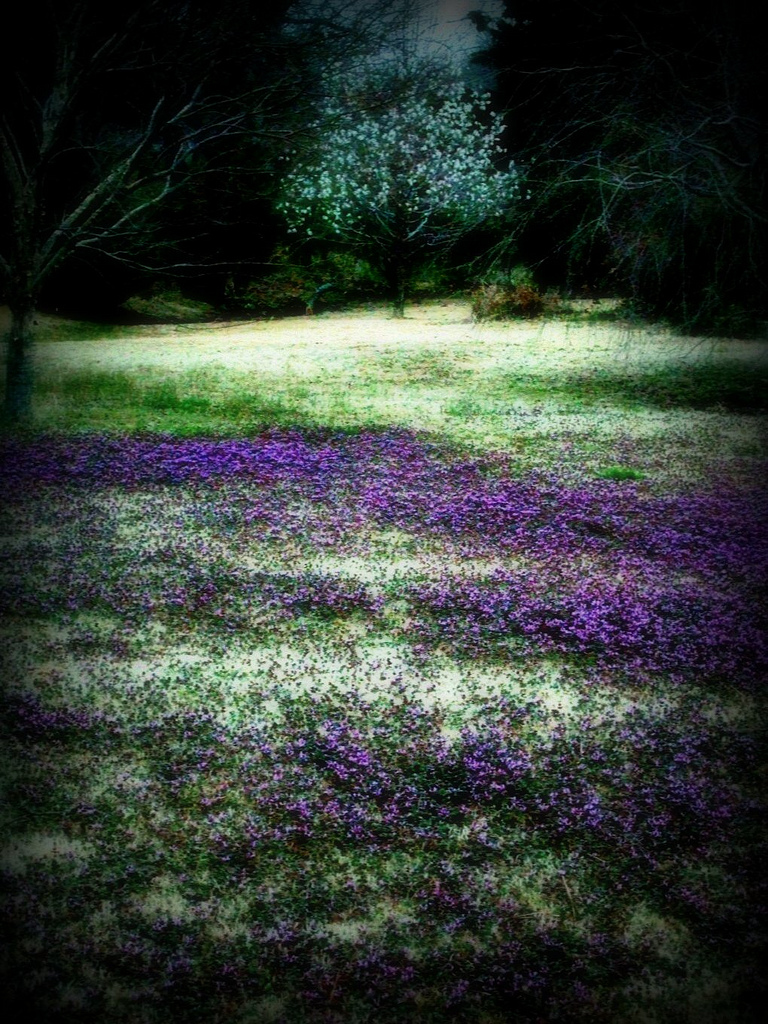
Clover is one of those scents that like that of the violet can be considered modest and unassming, yet like the latter too gave rise to an extremely popular movement of appreciation for it expressed both in literary form and perfume. In honor of St Patrick's day and the green shamrock, I decided to take a closer look at clover as a scent rich with history.
The 19th century was particularly sensitive to its rustic, bucolic charm, a taste which culminated in the creation of Trèfle Incarnat by L.T. Piver by Pierre Armingeat, Jacques Rouché (the son-in-law of L.T. Piver) and Georges Darzens at the turn of the 20th century. The exact date for its introduction vary, ranging from 1895 to 1896, 1898 or 1900...
Summary of the Article:
• Clover and the Diffuse Pantheistic Sensitivity in the 19th Century and early 20th Century
• Re-created Clover and the Modernist, Industrialist Sensitivity
• The Rise and Fall of Clover from the Fresh Air of the Countryside to the Confined Air of the Whorehouse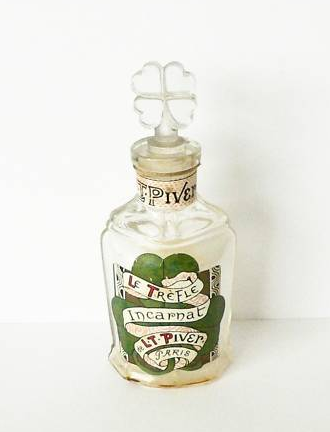
Ca. 1896 is the date when chemist Georges Darzens isolated the aromachemical called Amyl Salicylate, which would make the creation of L.T. Piver Trèfle Incarnat possible. This perfume was a bestseller of the Belle Epoque and would remain so until the late 1920s, at least.
Today, clover perfumes are few and far between, although the clover note is to be found in a number of compositions including Herba Fresca by Guerlain. The new scent Clover that Demeter Fragrance Library just released for spring 2010 made me think about the heritage of clover fragrances and why despite its lovely sweetness clover is not a staple note in our perfumeries, like other simple soliflore scents are.
It may well be that it fell victim to its own success as it was both cheap to produce and widely beloved. Or to summarize the phenomenon without really explaining it, it just fell out of fashion like the violet craze, which itself is back in 2009-2010 as a polite trend rather than as a full-on mania. It is worth noting that preceding the discovery of Tréfol by Darzens there existed in 19th century literature a culture of appreciation for the smell of clover.
What I find interesting is to realize how uplifting the aroma must have been to all these authors who took the time to write down their sensations about the perfume of clover in its natural state. There isn't a biblical tradition to support it for instance. It is a humble bloom, as noted by many. The banal little plant whose scent is half-floral and half-herbaceous was felt to be captivating probably also because - and this my hypothesis - it embodied aesthetic and moral values that were cultivated at the time. Recurring descriptors stress the natural power of diffusion of the clover scent together with the feeling of familiarity and simple elation it elicits.
Clover and the Diffuse Pantheistic Sensitivity in the 19th Century and early 20th Century
To me, this diffusive characteristic which is often noted may explain in part its popularity pre-1896, as it met with a pantheistic sensitivity, one that looked at nature as being a temple, a place in which a sense of communion and unity could be experienced. Therefore, when reading recurring phrases like "loaded with" or "charged with" the scent of clover to speak of an olfactory impression in situ as the rusticating visitor experienced standing in a countryside meadow, it strikes me as corresponding to a certain sense of exaltation that was cultivated while engaged in the contemplation of nature. In fact, in one passage this aspect is made obvious as the "smeller" is disturbed by the fact that a fellow human being does not commune in the scent of clover as much as he'd wished for. The all-pervasive scent of clover was a symbol of the unity of man and nature.
Clover was an apt olfactory symbol of what one sought in nature. Through it, was not expressed a quest for rarity, a quest for exoticism, but on the contrary for an olfactory signal that further established the reality of a beauty that was natural, extremely accessible to everyman and gently familiar.
There might have been more or less conscious recollections of gustatory sensations too. Like clover honey or clover butter which it perfumes, it is a wonder of nature and marvelous except that people forget about it and do not appreciate it fully because honey is not priced like gold and fresh butter like caviar. They are the simple but certain, yet overlooked abundant luxuries of nature.
I would like to quote a passage from the diary of the great American pantheist poet, Walt Whitman (1819-1892), who felt the urge to call and encompass the space of three days in 1879 when he was sixty on "July 3d, 4th, 5th" with the words "Clover and Hay Perfume." In that entry he wrote,
"Clear, hot, favorable weather -- has been a good summer -- the growth of clover and grass now generally mow'd. The familiar delicious perfume fills the barns and lanes."
Ensues an idyllic description of the countryside reminiscent of a painting by Jean-François Millet in which even the laborer's work and tools become ideal.
In 1885, the Gentleman's Magazine also liked to characterize the scent of clover as "the familiar fragrant clover perfume."
The scent of wilting clover is mentioned in other texts; in a 19th century culture which was much richer in and appreciative of the aromas of hay (see Whitman above) given the importance of horse transportation and the greater part accorded to the rural economy, we can see dry clover and its-hay-like scent to be consistent with the taste for hay-like coumarin popularized in bottled form by Fougère Royale by Houbigant in 1882 - the first commercial synthetic fragrance composition.
Writer Guy de Maupassant who was brought up in the Normandy countryside and was a traditionalist by taste (he hated the Eiffel Tower and had to take his meals in a restaurant at its foot which turned its back to it) fount it delectable and made it his signature scent.
The L.T. Piver Trèfle Incarnat- it is a fact little known - is considered a fougère perfume, like Houbigant Fougère Royale. Some even confuse it as the first historical fougère. The Fougère genre was defining of the period as Jicky by Guerlain (1889) also shows.
Garden writer Lena May McCauley (1859-1940) dedicated a chapter of her book The Joy of Gardens (1911) to clover and what is furthermore noteworthy, to its scent more specifically. She wrote some of the most heart-felt pages on the modest overlooked yet ultimately hard to ignore charms of the perfumed clover.
"Everyone with a taste of sweet knows the flavor of clover honey. It inherits the deliciousness of the nectar of the gods gleaned from the thymy banks of the vale of Hymettus and the slopes of Parnassus ; and who dares deny that the clover meadows were there, and but escaped the eyes of the poet though he inhaled their fragrance?"
She evocatively describes the differences in scents between the white and the red clover, the latter which inspired Trèfle Incarnat.
"White-clover perfume is as elusive as that arising from swinging censers above the Virgin's shrine in Old World chapels, but red-clover fragrance has all the alluring qualities of the pungent scents of sandalwood and Eastern spices."
Finally, she cannot disguise her enthusiasm and makes us think that a scent called Happiness or Exhilaration ought to include the clover note,
"Well should nature-lovers cry "All Hail !" in the hour of clover bloom, for these are the true aristocrats of the pastures, and have climbed high in the scale of evolution."
There are many more mentions of clover. John Burroughs also dedicated passages to it. How could he not, since he recorded every sensation in sight?
From the available corpus, we get a sense of a noted sensitivity to the scent of clover, one that moved writers to take their pens and describe it.
Re-created Clover and the Modernist, Industrialist Sensitivity
Perfumers themselves when they were able to recreate the aroma of clover at will did not forget the naturalist context from which it emerged. Its inventor, chemist Georges Darzens himself could not help but wax poetic when he described the aromatic profile of Amyl Salicylate first smelled in his laboratory. It transported him to another place and that locus smelled like "a meadow of clover blossoms in bloom in the August heat." It was summer in a bottle and a particle of the solar system was to be found in it.
In the beginning of the 1920s, when the scent had still retained its evocative power which were to subside over the years, another French perfumer-chemist as they were often called then, J-P Durvelle, enthused by characterizing a field of red clover as being "poetry in perfumery."
In the milieu of professional perfumers, it may well have been also that the artificial scent of red clover came to be one of the signature aromas of the avant-garde of their art. To this day, clover is considered as one of the most imaginary aromas of perfumery having more to do with creativity than a copy of it. In this imaginary space, perfumers are able to find freedom and not be simply the slavish copists of nature.
Famous perfumer Ernest Beaux, the creator of Chanel No5, remarked that the advent of L.T. Piver Trèfle Incarnat and its use of a synthetic aromachemical heralded the beginning of a new form of perfumery, one capable of being original and creative, in other words, an art form, saying,
"We now saw a perfume emerge from banality, the Trèfle Incarnat of Piver, based on amyl salicylate."
The perfume by L.T. Piver was a tremendous success at the Exposition Universelle of 1900 in Paris where it was introduced to a larger public in a setting that was particularly luxurious. It is understandable that Beaux felt the thrill of new frontiers, both as a trained nose and simply as a man of the 19th century moving into a new century that held so many promises for modern olfactory sensitivities and perfumery. He himself would be a key participant in the development of a modern aesthetic of perfume with the creation and launch of No.5 with its industrial punch of aldehyde C-12.
The Rise and Fall of Clover from the Fresh Air of the Countryside to the Confined Air of the Whorehouse
If our thoughts are guided in the direction of a country-style perfume when thinking of Trèfle Incarnat and its descendants, it is important to realize that the scent of clover and red clover in particular was once thought to be erotic.
Once the perfume was created and hailed as a sign of modernity then worn by many more people, it came for some reason to be associated with easy virtue, erotic encounters and after a while lost all luster by being derogatorily qualified as "common."
The industrial origins of the bottled scent of clover ensured that the once beloved-by-nearly-all scent of the countryside in the summer would be widely accessible. The fact that it was cheap prevented it from being an instrument of social elevation and distinction by those who are interested in using perfume to do such things. Apparently, women who wanted to seduce on the cheap might have become too easily associated with it for by 1928 it was described as a "violent, sensual and common" sort of perfume. It was associated in a pejorative manner to women designated as "Pierette", women of no import and easily permutable.
To confirm this unexpected evolution from countryside meadow idyll to the whorehouse, we have the testimonial of French musician Francis Poulenc (1899-1963) who would recall that when he visited houses of ill repute, those houses that had very tightly closed shutters, he would be able to smell the Trèfle Incarnat - but also Azuréat by the same house of L.T. Piver - in the hair of both blondes and brunettes who were waiting for clients inside them, thereby revealing its wide adoption by those in the know. This might have contributed to the popularity of "Le Trèfle Incarnat" as it was called with a familiar tone, but also debased it.
L.T. Piver Trèfle Incarnat was thus a perfume hit not only in polite society for some time but after a while of an underground yet widely disseminated sort, the red-lights circuit. We can only imagine the transfers of scented molecules from the manes of prostitutes to the gentlemanly collars of the bourgeois paying for their carnal pleasures and an involuntary dose of Trèfle Incarnat at the same time. It might have scented many an early morning street in Paris at the time for these reasons.
The fact that Amyl Salicylate or artificial clover was initially added to a fougère base for Trèfle Incarnat and that as perfumer Patricia de Nicolaï notes few fougères today do not include Amyl Salicylate can only leave us wondering about the overwhelmingly masculine connotations of the fougere genre despite the existence of feminine fougeres.
It is therefore not surprising that the scent of bottled clover came to be associated not so much for most people with village innocence and the bright future of perfumery as with the memories of meretrician encounters and that it might have tainted further associations.



Wonderful post! I wish there were more clover scents available at this time. I read that cut grass is one of or maybe the most loved fragrance -- other than rain on dry earth, for people all over the world. Probably time for simple scents such as these to make a comeback.
Thank you! Yes, I'm hoping for a comeback too, of clover scents :)
I'm not surprised that cut grass would send shivers down people's spines :) I also love it.
Simple scents indeed go well with the ecological, back-to-the-essentials state of mind. In the end, I'm for eclectism.
The very first perfume i ever possesed as a little girl, was a Clover Oil my daddy brought for me from a duty trip. Mmmhhh.... memories! I wish there were more clover notes around!
Greetings
lillie
Greetings! What a sweet memory and testimonial.