|
|
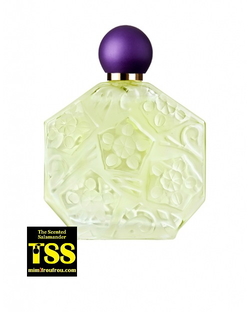
Maréchale 90 is the modern 1994 reformulation of the original Eau à la Maréchale created in 1669 for la Maréchale d'Aumont wife of Antoine d'Aumont. Her name is also attached to a powdery concoction for hair and wigs called "Poudre à la Maréchale" which she created herself. It is reported that the air in the salons was heavily perfumed with this powder covering many an aristocrat's head. References to this preparation can be found in 19th century French literature where it designates a face powder as well. According to the Société Française des Parfumeurs, this perfumed powder originally comprised orris, coriander, clove, calamus root, and sedge...
Continue reading "Crown Perfumery Maréchale 90 {Perfume Review}" »
I just visited Marina's perfume blog, Perfume-Smellin' Things, and learned that Made by Blog has undertaken the project to create two perfumes for two of my fellow-bloggers, namely Katie from Scentzilla! and Marina from Perfume-Smellin' Things. If you felt frustrated that you won't be able to follow the episodes of the new British reality TV show focusing on perfume-making over 6 months which is set to start next week on Living TV in the UK, you might instead elect to follow the different stages of the perfume creation process in the blogosphere.
The blog's readers will be allowed to participate as informal evaluators of the 2 perfumes in progress as samples of the trial fragrances will be put on sale on the Made by Blog website. Clement Gavarry and Laurent Le Guernec, both of IFF, are the two perfumers entrusted with the tasks. No limits will be put on cost nor time. Nobi Shioya, the instigator of the project, wishes to offer some creative space to the perfumers and sees this as an opportunity for them to create outside of the logic of the mass-market. He is also interested in breaching the gap between the secluded and rarefied world of the big perfume industry and the individual consummer. In this case, the only constraints set on them will be those set by Katie's and Marina's dreams of an ideal fragrance for themselves. The question is, from which side will the perfumers, in final analysis, get more pressure? From the mass-market or from the educated, picky noses of Marina and Katie? I am sure that their dialogues will prove to be fascinating.
Stay tuned.
Nina Ricci will launch a new women's fragrance this summer called Nina. The fragrance is touted as the brand's single most important release in 10 years. Nina was composed by noses Olivier Cresp and Jacques Cavallier of Firmenich with the Asian consumer in mind. The brand hopes to strengthen its position in the international fragrance market and in particular in Asia. "Notes include lemon, apple, peony and praline over a base of apple wood and white cedar and musk. The juice comes in a raspberry-pink tinted apple-shaped glass bottle topped with silver leaves around the cap, designed by French agency LOVE. " (updated 5/31/2006) Escentual offers a pic of the flacon as well as a more detailed description of the notes: "TOP NOTES: Calabrese Lemon and Lime Caipirinha. MIDDLE NOTES: Red Toffee Apple, Vanilla Infusion, Moonflower and Peony Petals. BASE NOTES: Apple Tree Wood, Cotton Musk and White Cedar." The fragrance will be introduced in France in July and will roll out to international markets in September and the US in 2007. Nina will be distributed in edt concentration: 30ml for 29 Euros, 50 ml for 45 Euros, and 80 ml for 55 Euros.
Sources: Article by Oonagh Phillips for Cosmetic News, 30 May 2006, Escentual, and WWD 10 June 2006. Photo credit: Escentual.co.uk
•An exciting new exhibition, which bears the title "Scent is Life" has opened and will be running through July 1 at the Esther M. Klein Gallery in Philadephia. The exhibition features 16 interractive installations incorporating 106 scents. Organizers, namely, perfumer Christopher Brosius of CB I Hate Perfume, the Monell Chemical Senses Center and the Esther M. Klein Gallery want people to become more aware of the role of smell in their lives and of the power of the fifth sense. One part of the exhibit is called "Autobiography" and showcases vials containing evocative scents such as Melting Snow, Crayon, Old Fur Coat, Doll Head, and Mitten. Another section called "Interpretation" regroups three different types of lillies scents to illustrate the significance of context and memory associations. There is a field of lillies, a perfume centered around lilly, and finally, an arrangement of lillies at a funeral. There is also an installation called "Pink Box Smells Green"; visitors are invited to put their heads into a box the color of bubble-gum and inhale the scent of freshly cut grass. The experience proves out to be slightly disorienting. There is also a section called "Day at the Beach". In it, people are given the opportunity to sniff scents such as Car Interior, Asphalt, Boardwalk, and Seashell. Source: Article by Joann Loviglio, Associated Press Newswires, 29 May 2006. Photo Credit: Esther M. Klein Gallery
Ah, these jasmines, these white jasmines!... Thus opens the poem The First Jasmines composed by Rabindranath Tagore in order to pay homage to jasmine sambac the ubiquitous flower of South Asia. In it, he attempts to re-capture the essence of his childhood nostalgically linking it to the scent of the flower as well as conveying his deep love for the fragrant blossoms. For those, like me, who have lived in regions where these flowers grow in abundance, their smell as well as their sights remain with oneself like an enchanted souvenir. In India, Jasminum sambac is also called by the very poetic name of "moonlight of the grove". This refers to the blossoming of the flower at night around 11 pm. Jasmine sambac has a scent that is headier than that of jasminum grandiflorum grown under our latitudes. It is also sometimes called Arabian jasmine and Grand Duke of Tuscany. Ormonde Jayne likes to use the Tagalog term for it, sampaquita...
Continue reading "Perfume Review & Musings: Armani Code Pour Femme by Giorgio Armani" »
• Tropiques is the first perfume in a new collection called "Collection Voyage" (Travel Collection) designed by Lancôme. The perfume will be exclusively distributed in duty-free stores. Tropiques edt 2006 is based on the original Tropiques created by Armand Petitjean in 1935. The original fragrance was part of a selection of five perfumes presented at the Brussels Exhibition that year to mark the debut of the Lancôme brand. The 2006 version is not a re-edition, but rather a re-interpretation of the classic scent. Tropiques is a fruity-floral. Top notes are cranberry, raspberry, and kumquat. Heart notes are mango, jasmine, blackberry. Base notes are Tonka bean and vanilla. • Fahrenheit Summer 2006 is now available in Europe. Price is 36 Euros for 100 ml.
• Armani Summer Mania (2006) is also now available in Europe. You can currently find some tester bottles for sale on eBay.
•A review by Tim Radford of recently published book by Luca Turin, Secret of Scent: Adventures in Perfume and the Science of Scent, Faber & Faber, May 2006. The book is not yet available in the US but you can purchase it in the UK through the online Guardian bookstore. Brut Strength •An article by John Arlidge on a popular designer branding trend in Italy. Consider spending the night a the Bulgari hotel, having lunch at the Armani Caffe, and later sipping coffee at 10 Corso Como. Milan on a Plate The Armani cafe in Boston, 214 Newbury Street
Violette-Menthe (Violet-Mint) was released in 2005. It is one of the perfume heirs to Ombre Rose, introduced in 1981 by the same designer, hatter Jean-Charles Brosseau. His latest fragrance in this series, which bears the title Fleurs d'Ombre (Flowers of The Shade), is Jasmin Lilas, only just recently introduced this spring. Another fragrance in the series, Ombre Bleue, was also released in 2005 although another source indicates 1987. Violette-Menthe perpetuates the tradition of Ombre Rose, now a classic in its own category; it is a very powdery fragrance if ever there was one. The bottle comes also from the same mold, one that was used in the past for a perfume called Narcisse Bleu.
Some people appreciate a beautiful powder in a fragrance and others dislike this very trait in it. It seems to me that there are more people now in the camp of powder-haters. However, officially the American perfume market is perceived as powder-loving. It has been speculated that this preference only reveals the depth of early attachment to baby powder smell in America. In seeking inspiration for his first fragrance, Brosseau wanted to recapture memories of his childhood, in particular, the memory of the powder used by his grand-mother, of Sunday luncheons spent at leisure with his family, of pastries, hats, and furs. Violette-Menthe recaptures once again those nostalgic olfactory memories, offering the same powdery base now perfumed with soft violet and cool mint. I cannot stress enough how much deftness and application are key in this case. Because the texture of the perfume is essentially powdery, it needs to be applied all the more judiciously. A light mist sprayed from a cautious distance is strongly recommended for the perfume not to transform itself into an obnoxious cloud of candied violets decorating you, the unwilling pastry du jour. If you apply the perfume lightly, it will render the texture of the powder finer and the scent will be allowed to develop subtly enough. It can make all the difference between creating the impression of a little girl's candy-sweetish scent or of a grown-up woman's sophisticated gourmand fragrance.
Although Violette-Menthe is classified as a green floral, I find that describing it as a powdery gourmand violet (floral) scent is also possible. The opening of the fragrance is somewhat herbaceous, minty, slightly woodsy, but the violet that shows its first petals make you think of sweets already. At times, the fruity wild blackcurrant note appears very prominent, as if forming a duo with the violet in the opening stage of the perfume.This sweet, fruity impression is confirmed by the development of the fragrance as the mint and herbs recede, now and then cooling down the powder, but not to the extent as to steal the show from the central impression: the sweet powder.  In fact, Violette-Menthe now starts to smell exactly like those delicious Japanese desserts called mochi which are made of pounded rice and filled with sweet red bean paste. It is the most unusual part of the fragrance. The powder becomes very softly sweetish, gourmand and even evokes very accurately the odor of the rice flour dusted upon the mochis. If you like L'Artisan Bois Farine, you might enjoy this aspect of Violette-Menthe. Further along, woods become more apparent, in this case sandalwood and oak. In the end you will have, hopefully, the impression that you are wearing a seductive violet powder with musky overtones but you might, alternatively, have the impression that your arm was rolled into some sweet Parma violet-scented flour covering a pastry chef's chilly marble board.
Top notes are bergamot, wild blackcurrant, peppermint, mint leaves Heart notes are Parma violet, peony, hawthorn, white flowers, rose Base notes are sandalwood, oak, sweet notes, musk
Tonight I am only mentioning my two latest perfume desires. In reality, I went on a buying spree this week and added several more items to my collection.
I have been very curious to try the re-edition of Lanvin My Sin for quite some time now. Believe it or not, I once had a nearly full big bottle of the original My Sin in my possession. What happened to it? I decided to pitch it because the red bakelite stopper with the mother and daughter logo carved in was slightly broken. Obviously, I was not the person that I am now. The bottle is now laying in some landfill awaiting to be discovered by the archaeologists of the future. Oh! de London -- Because it harks back to the sixties and still has a particularly devoted and loyal following 30 to 40 years later. The description of the notes too is alluring. "Oh! de London Perfume has top notes of bergamot, Russian sage and Roman chamomile. Middle notes of Chinese geranium, clove bud, rose petal, violet, lily of the valley, ylang-ylang and heliotrope. Dry down notes of East Indian sandalwood, cedarwood, vanilla, oakmoss and vetiver." Perfumes are available from Long Lost Perfume
Norell was created in 1967 by nose Josephine Catapano for couturier Norman Norell. It is one of the early American design fragrances; it was introduced in 1968 or 1969, according to different sources. Catapano is also the author of Estee Lauder Youth-Dew (some uncertainty remains regarding her authorship in this case) and Guy Laroche Fidji (1966). Catapano considered Norell to be her favorite fragrance amongst the ones she had created. She reportedly said, alluding to the neglect of Norell by the public in the 80's and 90's "It's a silly world. It's the best fragrance, and nobody buys it anymore"...
Continue reading "Perfume Review & Musings: Norell by Norell" »
I must confess that, on occasions, I actually do like to compare perfumes. This week, for example, I undertook a systematic investigation that undermines Roudnitska's very ideal of unicity regarding the perception of a perfume; I deliberately attempted to unearth a collection of perfumes that address the same theme, namely, offer an interpretation of the same dominant note ( I will unveil the results of this investigation-cum-quest later). One can wonder whether his distaste for artistic comparison entailed distaste for comparison at all levels of reality. I have not studied his method of teaching perfumery. The only information I have about his pedagogical method comes from an account by his son Michel. It appears that in this case too he privilieged a great economy of means and intense focus on a sole object of study. His son recounts how his father's teaching method would be to ask him to re-create the formula of a given fragrance that he had composed and now handed to him as an exercise to complete. Michel Roudniska (the creator of Noir Epices and Bois de Paradis among others) then had unlimited time to try to recompose it, guess the notes as well as their relative proportions to each others. He was not allowed to divert his attention apparently from that one task. It was a tremendously subtle and difficult enterprise that could take up from several months to a year. Edmond Roudnitska was interested in elevating perfumery to an art form. To this effect, he wrote aesthetic treatises on perfumes and sought his inspiration in the works of Andre Sourdel, an art historian. His efforts were aimed at making perfumery statutorily be less of a craft and more of an art. Nevertheless, it still remains, despite his efforts, that perfumery continues very easily to be apprehended more as a craft than an art. And there is undeniably great pleasure to be derived from, in all simplicity, well-crafted scents. In this sense, certain fragrances are completely satisfying; they will not open new vistas onto an imaginary and visionary world, they will not cultivate dissonance, be revolutionary, but they will have the capacity to sublimate natural aspects of our world. This being said, the instinct of the craftsman was never dead in Edmond Roudnitska, for in the end, a perfume had to smell good to him; this still stood as the ultimate test. But if you think of perfumery as an art, liberated from all constraints of bourgeois good taste and necessity to please, not only you, but others as well, then you would have to accept the idea that a perfume could smell bad, be disturbing, difficult to wear, provided it was thought out, interesting, and meaningful. This idea is probably still difficult to accept because at a fundamental level we use our noses in a very primary manner to distinguish between good and bad smells. The foul is linked with danger, poison, death, corruption etc. The pleasing smell is linked to sustenance of our life force; it is to be interpreted as a sign that a natural balance exists, that a food is edible, that a person is healthy, that all things in our environment were checked and found out to be normal. There is a strong sense of normalcy and harmony as reiterated values attached to our sense of smell. This innate disposition in a perfume to be seductive and pleasing in order to attract sexual partners to allow for the reproduction of the species makes it less free to be just an art medium. Even the sublimation and transformation of scent as sex into scent as fashion in the 20th century pushed it further in the direction of being an harmonious medium of expression. A perfume has to go with your mood, with a certain social occasion, with your skin chemistry, even be a reflection of who you are. A perfume is not supposed to clash with any entities, it is supposed to take on an espousing contour. The intervention of our persons within the creative space allocated to fragrance creation makes this art form very tributary of our own inclinations. Even portraiture does not have to go to the extent of being a reflection of who you are, it can just be a reflection of you as seen by an artist. Renaissance portraits that were commissioned by wealthy patrons still reflect more the manner of an artist than the personal, unique individual style of the subject in the painting. The difference is that Renaissance painters did not paint on bodies. Tattoos are more like perfumes because they adorn the body and thus are made part of the representation of the self. You are also made morally responsible for the display of that art on your body, even if the author is not you. However, perfumes have more material to play with than flat tattoos; they have time and memory to play with. One should also keep in mind that perfumes are only contingently applied to the body. Serge Lutens' creations are closest to this art conception that puts preeminent stake in the artist. His fragrances are the most indifferent to our skins, to our persons and center more on his vision, you be damned. The result is that his scents are sometimes truly difficult to wear, i.e. not pleasurable to wear, and I personally feel at times that I am just being used as rented space/ skin/ gallery for the exhibition of his paintings. Being a person, I resent being treated like a simple space, an ambulatory venue for his creations. This sentiment is not just about a good or bad fit between the perfume and me, it is about self-respect and a certain conception of, yes, humanity. So there again, we go back to this idea that perfumes have to do with human relationships and not just with art. Perfumery - the most humane art form, the one that is most called upon to embody the idea of the common social and moral good...of human bondage. Many more things could be said, I will stop here for now.
•A new women's scent, Spirit of Scotland, inspired by Scottish malt whiskey will be released in Great Britain in the fall. Initial reviews appear to be vastly positive. Its author, perfumer George Dodd is the creator of a line of fragrances, drawing his inspiration from the Scottish landscape and history. They are available here. A precursor to the new fragrance is one called Robbie Burns named after the great Scottish bard; the masculine version, Robbie Burns - Gentlemen, is based on notes found in whiskey while the feminine version, Robbie Burns - Lady, is centered on a rose theme. The earthenware flacons are reminiscent of the types of flacons that would have been commonly used in the 18th century during Robert Burns' lifetime. • Manufacturer Lotus "...has blossomed into the driver-care business and launched its own perfume. Lotus eau de toilette fragrance is said to have an invigorating character reminiscent of the thrill of the cars. Each bottle is shaped like an engine cylinder, with the brand logo etched on the side, and is available only from the Perfume Shop (0845 601 1950, The Perfume Shop ) at Pounds 19.99 for a 50ml bottle." Source: The Sunday Times, 21 May 2006 • Elizabeth Arden had also announced earlier this year that the company would launch a fragrance called Daytona 500 "...to capture the exhilarating thrill of this racing spectacle and put it in a bottle." Its launch is planned for the second or third quarter of 2006.
Source: Brand Sense Partners • Valentino V ete is now available at Neiman Marcus. It is described as a modern oriental fragrance. Top notes of bamboo leaves, lychee, and violet. Heart notes of Turkish and Bulgarian rose, peony, jasmine, and geranium leaf. Base notes of musk, cedarwood, sandalwood, and patchouli
• A new Salvador Dali perfume called Purple Lips will be released in September. Notes are blueberry, crocus, pomegranate, violet, lilac, vanilla orchid, amber, sandalwood, musk.
Source: aromat.ru
• An article by Terry Kirby in The Independent of 24 May 2006 on the search for a perfectly scented rose: Flower Power at Chelsea: in Search of the Perfect Rose
Their groves o' sweet myrtle let Foreign Lands reckon, Where bright-beaming summers exalt the perfume; Far dearer to me yon lone glen o' green breckan, Wi' the burn stealing under the lang, yellow broom. Far dearer to me are yon humble broom bowers Where the blue-bell and gowan lurk, lowly, unseen; For there, lightly tripping, among the wild flowers, A-list'ning the linnet, aft wanders my Jean.
Tho' rich is the breeze in their gay, sunny valleys, And cauld Caledonia's blast on the wave; Their sweet-scented woodlands that skirt the proud palace, What are they?-the haunt of the Tyrant and Slave. The Slave's spicy forests, and gold-bubbling fountains, The brave Caledonian views wi' disdain; He wanders as free as the winds of his mountains, Save Love's willing fetters-the chains of his Jean. Their groves o' sweet myrtle - 1795
"Smells are surer than sounds or sights to make your heartstrings crack"
 • The Chicago Tribune is organizing a virtual perfume contest. You have until Thursday to submit up to 3 entries describing imaginary perfumes of your choices. The winner will get a bottle of the new Play-Doh scent. No 189: Make scents • "For the first time American brides-to-be can design their own unique perfumes and use them as wedding favors. The favors are available for both men and women and are offered by fragrance for you in the UK. The new service is fully explained in a specially designed Website" http://www.favorsformywedding.com/
Source: PR Newswire 22 May 2006
• A short piece in the Sunday Times of 21 May 2006 on perfume historian Elisabeth de Feydeau's book, recently translated into English, A Scented Palace: The Secret History of Marie-Antoinette's Perfumer. The Sybarite • A preliminary research in psychology shows that flowers improve mood in both men and women Flowers can improve mood Source: Orlando Sentinel 21 May 2006 • A restaurant chain in Lithuania plans to bottle the scent of freshly-baked pizza. They stress they want to tap into the happy emotions associated with the smell. Source: Sunday Mercury, 21 May 2006

What I like about Rose d'Été (summer rose) and what makes it a distinctive rose fragrance to me is the slight scent of decay that emanates from it. It is not at all a fresh rose but on the contrary it is a rose redolent with all the scents of ripe summer fruits that surround this flower in the imaginary garden evoked by its creator. The way I sense it, it is that antepenultimate time of summer not quite yet that time just before the end of summer. As the fragrance liberates itself from the glass phial there is a very brief moment dominated by fresh notes.Then you are invited to dip your nose into the soft satiny heart of a rose, that part of the flower which retains its scent at the heaviest. According to the description of the notes it is a yellow rose and it smells realistically so...
Continue reading "Perfume Review & Musings: Rose d'Été by Les Parfums de Rosine" »
|