|
|
Scented Thoughts Archive
Page 7 of 8 • 1 2 3 4 5 6 7 8
The red velvet box finally came. I smelled it before opening it as I was wondering whether all put together the perfumes created an interesting dissonant or harmonious smell that might have transpired through the walls of the coffret. One end of the box smelled moldy, you will know why later, the other one was neutral....
Continue reading "First Impressions of the Thierry Mugler Coffret Based On Perfume The Novel by Süskind & Perfume The Movie by Tykwer {Scented Thoughts}" »
Why do you have to go see it? Stay tuned! The Scented Salamander was invited to an advance screening of the movie Perfume: The Story of a Murderer that will be in theaters in a month on December 27th 2006. She will fill you in soon! I am letting myself be penetrated by the charm of the movie and trying to figure out how to write a review without including too many spoilers:)
I have finally come up with a list of Beautiful Black Perfume Bottles. Writing down these names and comparing the bottles amongst themselves made me realize certain common points that they share and some of the ideas regarding the treatment in black of perfume bottles. I will pick a few to see if the contents match the aesthetics of the flacon. I have already come up with the thought that some perfumes should be dressed in black to convey the full impact of their personalities, like Dzing!, Femme, Youth-Dew, Royal Secret, Réglisse, Sables, Patchouli Antique, or Lonestar Memories (yes, Andy). Which brings me to think that Coffee scents, as I see it, would be enhanced by black flacons for containers although if that became a dictum it would soon become boring. When I try imagining a coffee scent held captive in a pink bottle, it somehows makes me feel ill in the stomach...
Continue reading "Beautiful Black Perfume Bottles & Smelling Black {Scented Thoughts & Perfume List}" »
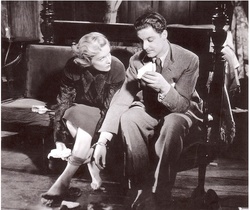
The Night Porter (1973/74) was a very controversial movie at the time of its introduction and remains to this day. It is the story of the destructive and sado-masochistic relationship uniting a concentration camp survivor and her former Nazi torturer. The movie was based in part on interviews done by Liliana Cavani with concentration camp survivors.
As the characters, played superbly by Charlotte Rampling and Dirk Bogarde, Lucia and Max, meet again in post-war Vienna 13 years later in 1957, the intensity of their relationship, to say the least, fully resurfaces, this time to demonstrate the impossibility of its continued existence and its doom. Lucia was 15 when she became Max's victim and lover and she seems to be irremediably marked by the experience.What had been limited to a game, paradoxically, when millions of people were being killed, notwithstanding the fact that it had been a dangerous and sickening one during the Nazi period, becomes suddenly something much more threatening. Max, who is trying to preserve himself from the new historical context by living like a "church mouse" in a hotel patronized by covert former Nazis, will not be able to fulfill his modest plan upon reconnecting with Lucia.The re-established rules of normal society now fail to be able to preserve their deviant behaviors and will even call for their condemnation by former Nazis who fear Lucia could stand as a witness against their crimes. It is easy for someone external, like a spectator, to decide that Max is a deeply deranged individual whose pathology found expression and nourishment in the Nazi period and, were it real life, would have to be avoided at all costs. The problem of course is that looking at Max through the eyes of Lucia makes the situation much more ambiguous as it becomes quite evident that the former Nazi officer is able to have her experience an almost animalic joy and happiness that is best expressed by her strange, deep, and happy laughter punctuating her descent into oblivion. Undeniably, Lucia is happy, much more than she ever was with her conventionally handsome American husband who represents by contrast urbanity, culture, civilization and who happens to be a renowned music conductor. She may be, we suspect, at the center of Max's life in a way that she never was at the center of her husband's life...
Continue reading "Scented Thoughts: Perfume Symbolism in Liliana Cavani's The Night Porter" »
I just went reading Chandler Burr's latest reviews of three fragrances in the New York Times: Puissance 2 Jean Paul Gaultier, Dzing! L'Artisan Parfumeur, and B*Men by Thierry Mugler. In it, the author develops the idea that these perfumes are to some extent reflections of a range of olfactory notes found in construction works. They all get 3 stars for succeeding in doing that.
I can only speak for Dzing! to say that I think it deserves better than a 3 star rating, even if that translates into meaning "breathtaking" by NYT standards. I feel that the originality of the fragrance is not properly recognized in this article as it is reduced to a flattening realistic interpretation of its personality. Chandler Burr is saying, in other words, that he smelled those notes before on the street around construction workers, hey, no big deal. "L’Artisan Parfumeur’s Dzing!, a unisex fragrance created by Olivia Giacobetti, the author of Diptyque’s popular Philosykos, is similar to the scent that daily bathes the urban hard hat, with his hammer and nails. I bet this guy never thinks about this complex scent, and I bet he would recognize it instantly". Does that do justice to Olivia Giaocobetti's imagination, originality again, and artistic risk-taking? I think not.... They don't know yet that they are wearing Dzing! by L'Artisan Parfumeur but they will soon, when they open the New York Times....
Continue reading "Scented Thoughts: On Chandler Burr's Take on Dzing! by L'Artisan Parfumeur" »
Bliss! I am starting to smell the crisp cool autumnal air of New England. This sensation is a forerunner of little celebrations of warmth, hot steaming mugs of mulled apple cider, coffee that sharpens the senses, candle lighting, breaths of warmth on one's frozen fingers, cosy fluffy ample enveloping scarves, smell of leaves and walks in the forest, and best of all a cool ambient air that needs to be infused with spices and amber. Now is the season for the deepest and richest Oriental scents to reveal their mystery. I want my perfumes to feel like glowing amber, rich cognac, and dark molasses...
Continue reading "Scented Thoughts: Not Knowing How To Perfume The Season" »
I just read Chandler Burr's new column in the New York Times. I am somewhat relieved to see that the author is not so keen on using the much advertised 4 star rating system which I cannot help but find a bit crude (please note, Burr does not even get to use 5 stars). But more to the point, I can only express scepticism regarding that approach to evaluating perfumes, so outrageously simplistic it is. It fails to convince because it does not leave room for the temporal, psychological, not to mention individual biological dimensions influencing one's appreciation of a fragrance. Stamping a perfume with one's four stars of approval could look ludicrous. In my opinion, there should be significant room left for doubt and openness, as a perfume, to use Umberto Eco's aesthetic notion, is perhaps more than any other art form, an open work of art...
Continue reading "The 5th Sense in the News & Scented Thoughts: Two Articles by Chandler Burr in the NYT" »
We love perfume flacons and in this sense we are the children of 20th century perfumery as defined by François Coty. This innovative entrepreneur and perfumer was a man of instinct and vision as he helped define the perfume concept as a mass-marketable object of luxury in which the container played an equal aesthetic role to that which was contained in it. He once said, "a perfume should attract the eye as much as the nose." The adequacy between the two signalled to Coty a successful fragrance, that is a fragrance capable of becoming the focus of women's aspirations and desires, their very expression in fact, until then perhaps only confusely felt and dreamt about. This message of Coty's is famous but not necessarily ingrained, even today 102 years later, in people's mentalities. Many a perfume wearer today will still consider the juice itself to be more significant than its container. This is a perfectly acceptable proposition but it does not explore fully what beauty and luxury can be as fuller, more complete experiences...
Continue reading "Scented Thoughts: The Flacon of M.A. Sillage de La Reine by Le Château de Versailles" »
Since with time our ideas tend to become simpler, the notion has struck us after writing our previous post on Patriotic Perfumes that a convenient way to address the question of the relationship between patriotism and perfume is to turn towards the testing of the whimsical project for now of creating a national fragrance. Countries have national anthems and flags with recognizable national colors but so far, to our knowledge at least, there has not been any governmental attempt at promoting an emblematic national scent or perfume. This may appear paradoxical because as we know, olfaction bypasses the conscious mind and is thus capable of recreating the past or transporting us to a place other than where our physical body is. This means that within the context of a nationalist project, the motherland or fatherland and the history of a country could theoretically be always present, contained in the few droplets of a national perfume and conjured up with each application. With such a powerful tool to influence people's consciousnesses one would think that it would have been deeply exploited. But, curiously enough, not really (Added: until Dec 2007 that is when the Korean presidential candidate Lee Myung-Bak is reported to use perfume as a means to influence voting)........
Continue reading "Scented Thoughts: My National Parfum" »
Patriotism on holidays which celebrate national independence is expressed through many semiotic activities and foci of symbolic activities worldwide. In America, manifestations of patriotism vary from region to region of the American motherland (or is it a fatherland we should be speaking of?) -- in Boston for example, people feel Bostonian by going to listen to the Boston Pops -- but we can rest assured of two things: there will be national barbeque-partying and fireworks illuminating the many corners of the sky all over the 50 United States tomorrow. From an olfactory standpoint, we can muse on and say that the 4th of July smells in the base notes of gourmand smoky burgers, burning hot coal, gunpowder, tangy, sweet and sticky tomato ketchup, rich boozy beer and maybe sweet cotton candy and apple pie with spicy cinnamon and let's not forget, musky sweat. In the heart notes there are green grass, tangy-green citronnella, soft wheat, aqueous cucumber, sweet corn, iceberg lettuce notes, and a dash of car interior and car polish. In the top notes you might find fresh mint, tart pink lemonade, coca-cola, frosted ice cubes, and light, cool, and fresh baby powder notes. This olfactory rêverie may smell hellish a priori to some but since each year the same note combinations reappear and people still throng the 4th of July events, you might have a formula of success here. Napoleon once haughtily remarked, "Impossible n'est pas français" (something like, "the word 'impossible' is not to be found in the French language.") This seems to be the motto of many a perfumer today and since many of them are French you might get a phenomenon of double-whammy hubris due to the fact that they are French and due to the fact that they are perfumers. In any case, since no one has yet dared to combine these multifarious aromas of the Fourth in a single bottle, let's turn to alternative, ready-made solutions to express patriotism and love of the motherland through perfumes. How shall we convey that patriotic message? It is often said that olfaction is the neglected sense and hence, in our case, a clearly neglected source of rich patriotic symbols. As of today, it is not consciously tapped into by the vast majority of the population to express patriotism alongside with wearing star spangled sartorial signs. So if you contemplate wearing something more celebratory of Americaness than just deodorant, please read on and see what my practical suggestions are.
Continue reading "Scented Thoughts: Patriotic (American) Perfumes to Wear on the 4th of July, Some Modest Suggestions" »
Finally, I am coming around to finalizing my list of fantafabulous scents for the summer. I hesitated between offering a hyper selective list of my top favorite in the different families of perfumes or composing a list revealing clusters of my most cherished scents for summer. I have decided to go for the second option because lists are also fun as exploratory tools, not just as embodiments of a perfect world and ideal life transliterated into perfumes. This allows me to bring together both old, historical favorites and new favorites; I could even include future favorites thanks to my uncanny sense of intuition, but I will stop there and not revel in the unseen...
Continue reading "Scented Thoughts: My Favorite Summmer Scents, Part 0" »
"Vanity of vanities and all is vanity" wrote the Ecclesiastes.....how very true; regardless, I am posting here a link to a lovely fashion blog, Are You A Beauty? owned by Ivy which features The Scented Salamander in her "Beautiful Blog Hunt Wednesday" column. I just learned about it yesterday and am thrilled to report that I got good press from her. The Scented Salamander is Perfume Nuts I will post a review of the book by Elisabeth de Feydeau, A Scented Palace, either today or tomorrow as I see that much interest was generated by it. This will be a review of the French edition, Jean-Louis Fargeon, Parfumeur de Marie-Antoinette that I had the opportunity to read several months ago.
I must confess however that, on occasions, I actually do like to compare perfumes. This week, for example, I undertook a systematic practical and empirical investigation that undermines Roudnitska's very ideal of unicity regarding the perception of a perfume; I deliberately attempted to unearth a collection of perfumes that address the same theme, namely, offer an interpretation of the same dominant note ( I will unveil the results of this investigation-cum-quest later). One can wonder whether Roudnitska's distaste for artistic comparison entailed distaste for comparison at all levels of reality. I have not studied his method of teaching perfumery. The only information I have about his pedagogical method comes from an account by his son Michel. It appears that in this case too he priviliged a great economy of means and intense focus on a sole object of study. His son recounts how his father's teaching method would be to ask him to re-create the formula of a given fragrance that he had composed and now handed to him as an exercise to complete. Michel Roudniska (the creator of Noir Epices and Bois de Paradis, among others) then had unlimited time to try to recompose it, guess the notes as well as their relative proportions to each others. He was not allowed to divert his attention apparently from that one task. It was a tremendously subtle and difficult enterprise that could take up from several months to a year. Edmond Roudnitska was interested in elevating perfumery to an art form. To this effect, he wrote aesthetic treatises on perfumes and sought his inspiration in the works of André Sourdel, an art historian. His efforts were aimed at making perfumery statutorily be less of a craft and more of an art. Nevertheless, it still remains, despite his best efforts, that perfumery continues very easily to be apprehended more as a craft than an art. And there is undeniably great pleasure to be derived from, in all simplicity, well-crafted scents. In this sense, certain fragrances are completely satisfying; they will not open new vistas onto an imaginary and visionary world, they will not cultivate dissonance, be revolutionary, but they will have the capacity to sublimate natural aspects of our world. This being said, the instinct of the craftsman was never dead in Edmond Roudnitska, for in the end, a perfume had to smell good to him; this still stood as the ultimate test. But if you think of perfumery as an art, liberated from all constraints of bourgeois good taste and necessity to please not only you, but others as well, then you would have to accept the idea that a perfume could smell bad, even foul intermittently, be disturbing, difficult to wear, provided it was thought out, interesting, and meaningful. This idea is probably still difficult to accept because at a fundamental level we use our noses in a very primary manner to distinguish between good and bad smells. The foul is linked with danger, poison, death, corruption etc. The pleasing smell is linked to sustenance of our life force; it is to be interpreted as a sign that a natural balance exists, that a food is edible, that a person is healthy, that all things in our environment were checked and found out to be normal. There is a strong sense of normalcy and harmony as reiterated values attached to our sense of smell. The basic sexual instinct is also a problem. The innate disposition in a perfume to be seductive and pleasing in order to attract sexual partners to allow for the reproduction of the species makes it less free to be just an art medium. Even the sublimation and transformation of scent as sex into scent as fashion in the 20th century pushed it further in the direction of being an harmonious medium of expression. A perfume has to go with your mood, with a certain social occasion, with your skin chemistry, even be a reflection of who you are. A perfume is not supposed to clash with any entities; it is supposed to take on an espousing contour. The intervention of our persons within the creative space allocated to fragrance creation makes this art form very tributary of our own inclinations. If we take the example of portraiture in painting, we can see that even it does not have to go to the extent of being a reflection of who you are, it can just be a reflection of you as seen by an artist. Renaissance portraits that were commissioned by wealthy patrons still reflect more the manner of an artist than the personal, unique individual style of the subject in the painting. The crucial difference is that Renaissance painters did not paint on bodies. Tattoos, for example, are more like perfumes because they adorn the skin and thus are made part of the representation of the self. You are also made morally responsible for the display of that art on your body, even if the author is not you. However, perfumes have more material to play with than flat tattoos; they have time and memory to play with. One should also keep in mind that perfumes are only contingently applied to the body. Serge Lutens' creations are closest to this art conception that puts preeminent stake in the artist. His fragrances are the most indifferent to our skins, to our persons and center more on his vision, you be damned. The result is that his scents are sometimes truly difficult to wear, i.e. not "pleasurable" to wear, and I personally feel at times that I am just being used as rented space/ skin/ gallery for an exhibition of paintings. Being a person, I can resent being treated like a simple space, an ambulatory venue for art creations. This sentiment is not just about a good or bad fit between the perfume and me, it is more about a sense of self-respect - I am more than an inanimate object and a blank canvas - and therefore, yes, a certain conception of humanity.
So here again, we go back to this idea that perfumes have to do with human relationships and interconnections and not just with art. Perfumery - the most humane art form, the one that is most called upon to develop the idea of the common social and moral good, of life in a community of social ties. Of human bondage. Many more things could be said, I will stop here for now.
While I was reviewing Coeur d'Eté and wearing it for the second time, I realized that this time I was comparing it to other sister scents. Smelling it then, I was less lost into it; I had switched on to an annoying analytical mode, or so I thought. As I felt somewhat disturbed by this, I decided to jot down some notes. Here they are:
I think that it (Coeur d'Eté) smells, however briefly so, a little bit like Champs-Elysées by Guerlain, a little bit like Carolina Herrera, and a little bit like Le Dix by Balenciaga, but all these being fused and made more subtle and complex. This, I think the second time that I try the scent. I cannot help but feel that it is rather reductionist on my part to try to break down the perfume into tiny bits and to find external references for it. In the end, it is not interesting. It has a practical purpose which is to communicate better about a perfume with another person who has never smelled it, but might have come upon the other ones you mention. yet, I realize also that it is unfair to the perfumer. It is like trying, too soon, to decompose the colored pigments found on a picture instead of contemplating it. It is also unfair towards yourself as it distorts your perception of the perfume.
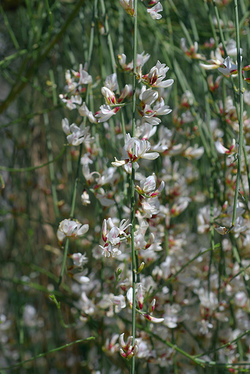
I am reminded of Edmond Roudnitska's advice. He once said that one should never attempt to compare a perfume to other scents because a perfume is by essence unique, meant to be appreciated on its own terms and that it was composed with that ontological orientation in mind. Doing otherwise would be like attempting to read two books at once or listening to two musics at once or deciphering a book instead of reading it. Confusion, cacophonia and analytical poverty will ensue. I find that, perhaps, this strong idealistic streak we find in the perfume creative process, as envisionned by Roudnitska, is somehow irremediably linked to an idealization of womanhood and femininity. The perfume is unique like a woman is unique to a man who loves her; it is meaningless to situate that woman within a series of comparisons for that man. In other words, Roudnitska is begging us to view a perfume with the eyes of love in order to take in its full beauty and uniqueness. So, we should resist the temptation to say "Y is a little bit like X." This idea is not lost on women; instinctively we look for the quality of uniqueness in a scent. That uniqueness will help underline our own uniqueness, make us true objects of love. An erotic dialogue is thus expressed through perfumes in our cultures. Roudnitska's ideals are embodied in Le Parfum de Thérèse which he created originally for his wife Thérèse. It is now available to the wider public of those other women through the Malle Editions de Parfums. We can thus touch that dream both aesthetic and erotic with the tip of our fingers and be reminded of a principle of unicity that was very important to him. Of course, this principle does not need be applied to serially produced perfumes who enthusiastically copy each others. But when we encounter a perfumer-composer with integrity and personal vision, we should, I think, forget about the other fragrances that fleetingly juxtapose themselves on the perfume you are smelling. It is perhaps like saying that an ensemble of seven notes are similar to that other musical passage in that other musical partition. It does not make much sense and it gives too much importance to the external reference. It makes your view of the perfume superficial. However, I must admit that if I feel bad doing this for a work by Roudnitska and a good one by Harris, I am much less embarrassed to do so for a perfume that is mass-produced and whose artistic aims are set lower. In this latter range of products, the defining mode of creation is extremely referential and fully aware of the externality of fashion trends in fragrances. One does not seek uniqueness in this case because it is simply too demanding and too risky. You seek variation rather or a twist on an idea. The irony is of course that people in fact crave uniqueness in perfumes. A perfume like Angel was mass-marketed, yet it was innovative and daring, and it has now taken over Chanel No5's place as the most popular perfume in France. And of course, Chanel No5 was daring too. Coeur d'Eté, to me, cannot be approached in a comparative manner. It has an integrity of its own which is the result of the artistry that presided over it and this should be respected, I think. At any rate, something in this perfume made me feel guilty for looking sideways at others. Photo is from Art et Parfum
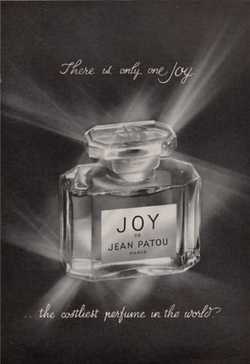
Starting today just past midnight and until midnight I will donate $1 to the Orphan Foundation of America for each message that you leave on this blog today. This effort is part of the Benevolent Blogging effort organized by Katie from Scentzilla! I will also hold a drawing for a bottle of Eau de Patou from amongst all the people who leave a comment (please see my previous post for more details about the charity event). If you do not wish to be included in the drawing for privacy reasons, for example, please let me know. I will ask either my husband or my three-year-old to draw (preferably my boy if he is not in too mischievous a mood!) You can leave a simple Hi or if you want, you can tell us what perfumes or scents you associate most with your mother as a way of celebrating Mother's Day. You could also tell us what is the best perfume compliment you ever received or the one that pleased you most. When I think of my mother, I think mostly of four perfumes that seem to have marked different periods of her life: Eau de Calandre, Chloe, Joy, and Femme. But to tell you the truth, she is not that into perfumes.
Orphans are children who one day lose a necessary presence in their lives and are made even more vulnerable than other children because of that. I hope we can help them a bit, but I also know that beyond this action we are undertaking today, what they most need is to find a good family. I have a friend who is an orphan who was abandoned at birth and she told me that, "Anything is better than the orphanage." She was saying that to explain to me how she had had the will to survive the mistreatment, even the torture, inflicted upon her by the companion of her adoptive father who would sometimes burn her legs with cigarette butts. There are many different reasons why children are given up for adoption. I saw a program on TV once where a woman decided after having had 3 children to give up the one she was pregnant with, mainly for financial reasons -- it was a matter of survival for her, for her family, and for the child. The program showed her giving birth and then not even wanting to take a closer look or have a close contact with the baby. It was heartbreaking to see the physical distance separating her from her baby and to think of the future life of that child.
Coco Chanel was abandoned by her father who left her in an orphanage after the death of her mother because he could not see himself taking care of her as a single parent. A friend told me that her father had been abandoned by his mother as a little boy in the midst of a crowd at the open market during winter. He remembered how she had let go of his hand at some point. That man, her father, buit a family afterwards but he was only able to speak about this event when in his fifties. She told me that her father had been so unspeakably scarred by this event that he had been able to talk about it and allude to the scene of his abandonment to his family only then. They never knew. I remember meeting her father and thinking how hard this man was, not mean. Just something in him felt as hard as stone. I wish that orphans may find other people who will love them. I also wish all of you much love in your lives. Please visit other blogs participating in Mother's Day fundraising! Beauty Addict for Orphan Foundation of America Blogdorf Goodman for FINCA International Brain Trapped in Girl's Body for FINCA International A Girl's Gotta Spa for Orphan Foundation of America MonkeyPosh for Humane Society of the United States and Muscular Dystrophy Association Mother Hen’s Place for Aga Khan Foundation Canada Legerdenez for Orphan Foundation of America One Child Left Behind for Heifer International Perfumery for FINCA International The Scented Salamander for Orphan Foundation of America Scenteur 7 for Orphan Foundation of America *Participating May 10th through the 15th Scentzilla! for FINCA International SmellyBlog for FINCA International The Soap Blog for UNIQUE That Obscure Object of Desire for FINCA International Urban Chick for Womankind Worldwide *Participating May 12th 'til she returns from holidaying a few weeks* Victoria's Own for FINCA International Yankee Family goes South for Orphan Foundation of America
Scented Thoughts Archive
Page 7 of 8 • 1 2 3 4 5 6 7 8
|
Fin O'Suilleabhain on
Les Exclusifs: Bel Respiro, No 18, & 28 La Pausa by Chanel {Perfume Review & Musings} {New Perfumes}
: Hi ... can I ask about the Stravinsky / Chanel image. Is ...
Thalestris Dupont on
Fragonard Caresse (1929/2008) {Perfume Review}
: Lovely perfume! Reminds me of the spring 2011 when I was wearing ...
Karen Lindsey on
Long Lost Crabtree & Evelyn Fragrance: Help Please {Ask The Readers}
: I just found this site and I so need to find someone ...
Regina on
Happy New Year 2012!
: Valentine's Day will soon be here. Any recommendations?
C Sasich on
Easy Tricks To Create Golden Globes Hairstyles! {Beauty Notes - Hair}
: My fave was Michelle Williams - modern , effortless not overdone . ...
kelvin neo on
Victoria's Secret Life is Pink Wish Pink, Live Pink, Hope Pink (2010) *New Fragrances*
: Hi good day, Can i know where can purchase or order Pink ...
Alan on
A Funny Post About Scented Candles {Fragrant Reading}
: Hell-scent candle, lol.
Gina on
Two Organic Oud Scents: Sama Oudh Jasmin & Undergreen Black Classic (2011) {New Perfumes}
: I want to try Sama Oudh Jasmin but checked the websites. I ...
Tammy on
Top 12 Best New Department Store Fragrances of 2011 for the Holidays {Perfume List}
: Wish this came with a little print out sheet for my next ...
Toñi on
Dance with Givenchy (2010) {New Perfume}
: Where can I get Dance with Givenchy? It's impossible to find it ...
Toñi on
Dance with Givenchy (2010) {New Perfume}
: Where can I get Dance with Givenchy? It's impossible to find it ...
evageli karounzou on
Choppy Waters for Stella Cadente Miss Me {Fragrance News}
: at 2007 i was in paris an i bought this perfume.Since then ...
Mandy Aftel on
Aftelier Perfumes Secret Garden (2011): Featuring Real Civet & Castoreum {New Fragrance}
: Thank you so much Marie-Helene for your lovely review! You are great ...
Kay on
Mona di Orio Chamarré (2009): Perfume Review in Memoriam
: This is very interesting. First thing that came to my mind when ...
Maddy on
Bint el Sudan, The Other, African Chanel No.5: Interview with Nick Evans of International Flavors & Fragrances, Inc. {Perfume Q & A - The Scents of Africa}
: Interesting post. I've lived in Ghana but I don't remember encountering anyone ...
All original content and translations herein copyright © 2006. All rights reserved; reproduction requires the author’s prior written consent. You are however welcome to provide a link back to the posts on this site as long as you explicitly mention their authorship, recognize the original source of the information you give, and acknowledge the site of origin.
Powered by Movable Type 4.32-en
|